

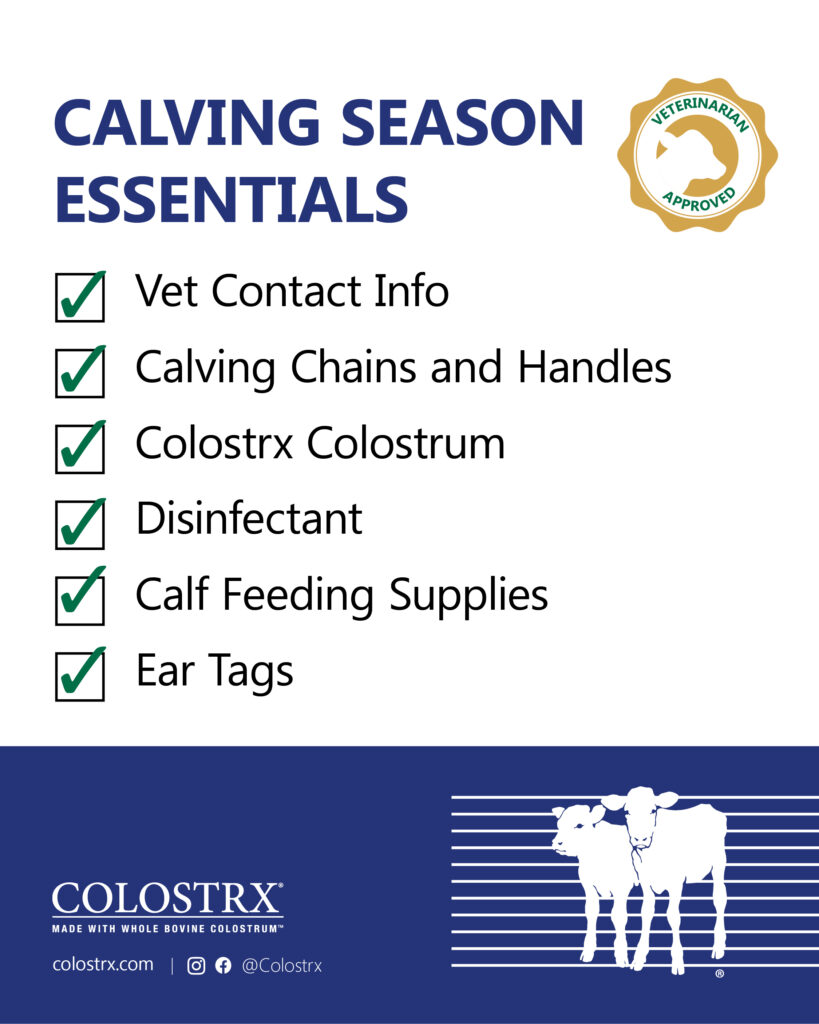
The first 24 hours of a calf’s life are the most critical. As we prepare for calving, taking inventory of the tools that need to be on hand should be top of mind before the first calf hits the ground. Make sure everything goes smooth this calving season by being prepared with our Veterinarian-Approved Pre-Calving Checklist.
1. Vet contact information
- Add this number to your favorites list! Make sure they can be called as soon as possible if things so sideways.
- Post the name and number of your vet on the fridge in the calving barn alongside your address or land location so anyone can acquire help during an emergency
2. Post calving protocol
- Talk to your vet before calving and develop a plan to deliver essential vaccines, vitamins, minerals or medications that should be given immediately post-calving or may be needed in the busy weeks to come
- Be sure that any decided protocols including dosages, and medication/vitamin/vaccine names are clearly displayed for you and any staff or calving help to ensure consistent calf care
3. Supplies to assist calving
- Calving can turn into an emergency situation quickly and you don’t want to be caught searching the barn looking for key materials when crucial time is passing. Be sure you have these essential items on hand, cleaned, disinfected, and ready to go:
- Clean Bucket
- Disinfectant (Chlorhexidine is recommended)
- Chains and handles
- Calf jack
- 7% iodine
- Lubricant (high quality, water-based)
- Palpation (obstetrics or OB) sleeves and latex exam gloves
* Calving Pro Tip *
When re-heating colostrum NEVER microwave it – allow colostrum to warm in a hot water bath to 110-120°F (43-49°C). Higher heat and microwaves denature the essential proteins (IgGs) that provide protective immunity to newborn calves
4. Calf tagging supplies
- This includes tags, a calf tagger, and tag marker or maker. Make sure you have all the tags you’ll need for calving season on-hand
5. Record Keeping Supplies
- Whether you use a calving book or input records online be sure you have the tools needed to keep good and accurate records throughout the calving season
- Recommended records to keep:
- Calf sex, dam, birth date, birth weight, calving score in addition to any other record important to track to understand and achieve the goals of your operation
6. Good Quality Colostrum
- It is a non-negotiable – calves NEED good quality and adequate colostrum as soon as possible. Sometimes this means human intervention. There is no such thing as feeding colostrum too early.
* Calving Pro Tip *
Keep records of sick animals, the date, what drug was administered, if a second dose is needed and if there are any withdrawal times. Keep track on your calendar to make sure calves aren’t treated twice or not at all!
- While straight from the dam is always best – if mom is dry and you don’t have any in stock – Colostrx (a 100% whole bovine colostrum replacement) can be there to ensure your calves get the immunity they need to make it to weaning or have longevity in the herd as a replacement. Make sure you have enough to supplement at least 10% of the herd.
7. Bottles, nipples, tube feeder
- This is important to get fluids in calves whether that be colostrum. electrolytes, or milk replacer.
- Disinfect between uses
- When it comes to tube feeders – plastic tubes offer more flexibility and reduce the chances of injuring the calf. However, they are more prone to damage, make sure you’re replacing them whenever you start to notice scarring in the tubing as this can be a breeding ground for bacteria
* Calving Pro Tip *
Have 2 sets of bottles/nipples and tube feeders, one for healthy calves and another for sick calves to avoid cross contamination.